
A sinking or leaning house is stressful enough without also not knowing what actually determines its cost to fix. Restumping quotes can vary a lot from house to house, and that variation isn’t arbitrary. It comes down to a specific set of factors that are worth understanding before you get quotes, so you know what you’re actually comparing.
What restumping involves
Restumping (also called reblocking) replaces a house’s failing or deteriorated stumps with new ones, typically because the original stumps have rotted, moved, or were never adequate for the site’s soil conditions in the first place. The process generally follows the same sequence regardless of the foundation method:
Assessment. An engineer or suitably qualified assessor inspects the existing stumps, the house’s condition, and the site’s soil to determine how many stumps need replacing and what’s causing the failure.
Design. The replacement foundation is designed for the site’s specific ground conditions and the loads the house imposes, not applied as a generic spec.
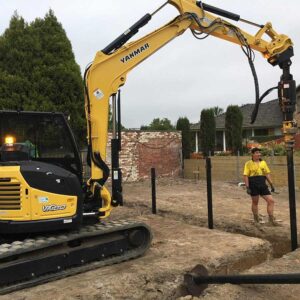
Installation. Stumps are replaced section by section so the house remains supported throughout, whether the new stumps are concrete or screw piles.
Verification and sign-off. The completed work is checked against the design and certified, so there’s a record that the foundation meets the required standard.
What changes the cost
Number of stumps. More failing stumps means more replacement work, and this is usually the single biggest driver of overall cost.
Site access. A house on a tight urban block, a sloping site, or one with limited clearance underneath costs more to work on than a house with clear, open access.
Soil conditions. Reactive clay, soft or saturated ground, or variable soil across the site can all affect how much design and installation work is needed, and whether standard stumps are viable or a different foundation method is required.
Extent of existing damage. A house with early-stage stump failure is a smaller job than one with significant structural movement, cracked walls, or doors and windows that no longer close properly.
Foundation method chosen. Screw piles take load immediately upon installation and verification, without a concrete curing period, which can reduce the time (and associated cost) a house is out of action during the works. Concrete restumping remains a valid and widely used method, particularly where ground conditions favour it.
Access to the underside of the house. Low-clearance subfloors sometimes need additional excavation or specialist equipment to get stumps in and out, which adds to the job.
The point
There’s no single number that applies to every restumping job, because the job itself isn’t the same from house to house. The way to get a real answer is a site-specific assessment, not a generic price list, and understanding these factors going in means you can ask the right questions when comparing quotes.