If your house shows cracks, doors that stick, or floors that slope, underpinning is often the recommended fix, and one of the first questions is what it will cost. There’s no single answer, because underpinning in Melbourne specifically is shaped by a few local and site factors that can vary a lot from one house to the next.
Why Melbourne is a particular case
Much of Melbourne sits on reactive clay soil, which expands when wet and shrinks when dry. That movement is one of the most common causes of foundation distress in the city, and it also affects how underpinning is designed and installed. A house on reactive clay generally needs foundations that extend past the zone of seasonal moisture movement, which is a different design problem to a house on stable, uniform ground.
What changes the cost
Extent of movement. A house with early, localised cracking is a smaller job than one with significant, ongoing structural movement affecting multiple walls or the roofline.
Soil conditions. Reactive clay, soft or saturated ground, or fill material all affect how deep the new foundation needs to go and what method is viable, which has a direct effect on the scope.
Number of underpinning points. More points mean more work, and like restumping, this is usually the largest single driver of overall cost.
Site access. Terrace housing, tight side access, or a house close to a boundary or neighbouring structure can all add complexity and time to the job.
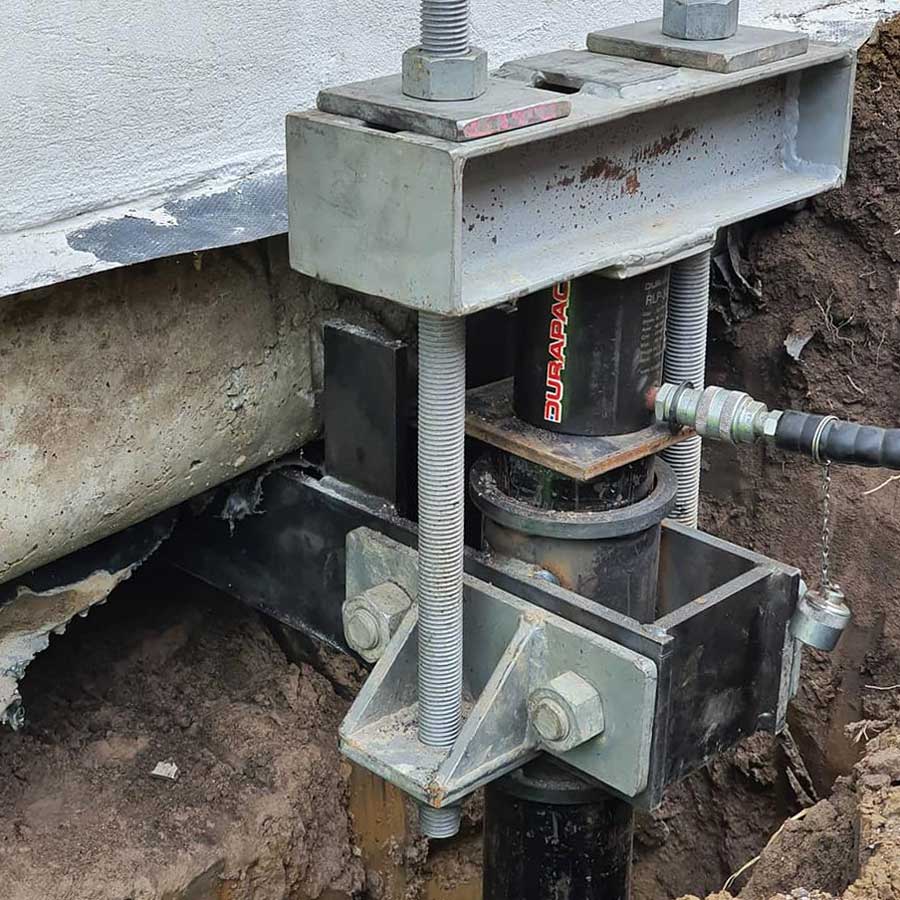
Foundation method. Screw piles can generally take load as soon as they’re installed and verified, without a concrete curing period, which reduces the time the property is disrupted during works. Concrete underpinning remains a valid method and is often the right choice depending on ground conditions.
Existing structure. Older homes, particularly those with heritage overlays or unusual construction, sometimes need additional assessment or staged work to underpin safely.
Getting a real answer
Because underpinning is diagnostic before it’s ever a quote, an accurate cost only comes from a site inspection and a soil assessment, not a general estimate. Two houses on the same street may require very different scopes of work depending on their specific soil profiles and the extent of movement already present.
The point
Underpinning costs in Melbourne aren’t random; they follow directly from soil conditions, the extent of damage, and site access. Understanding those drivers means you’re asking the right questions when you compare quotes, rather than comparing numbers without knowing what’s actually behind them.