
A foundation is the one part of a building you never see again once it’s finished. That makes it reasonable to be cautious about anything less familiar than concrete. So it’s worth being clear about what screw piles actually are, and how long they’ve been doing the job.
The helical pile was invented by Alexander Mitchell in 1833. Nearly two centuries later, the fundamental design principles haven’t changed. A central steel shaft, a helical flight (or flights) that draws the pile into the ground under rotation, and a foundation that carries load through a combination of end bearing at the helix and skin friction along the shaft. It’s not a new idea being tested on Australian buildings. It’s an old idea, refined by engineering standards and installation equipment, still doing the same job it always has.
Concrete has earned its trust because it’s familiar and everyone defaults to it. Screw piles carry the same length of track record; it’s just less visible.
How it actually works
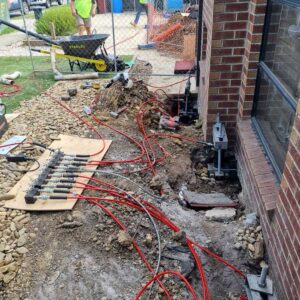
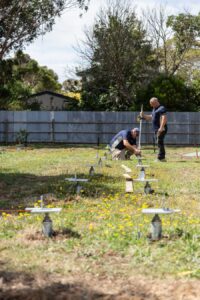
Installation is mechanical, not chemical. A hydraulic drive head drives the pile into the ground until it reaches the design depth or torque, whichever governs. That torque reading isn’t just a number on a gauge. It’s a real-time indication of the ground’s resistance, and by extension, the pile’s load-bearing capacity, verified as each pile goes in rather than inferred afterwards. There’s no curing period, no concrete to fail if it’s poured badly, no waiting to find out if it worked.
This is also why screw piles perform well in variable ground conditions and reactive clay. The pile can be designed and installed to suit the ground’s actual behaviour, rather than assuming uniform conditions across a site.
What “proven” looks like in practice
Two centuries of use is one kind of evidence. A specific track record on the ground is another. Foundation Technologies Australia has completed over 3000 projects and installed more than 700,000 screw piles across Victoria and Queensland, across single homes, modular buildings, energy infrastructure, and government and civil projects. Every installation is backed by third-party engineering certification and a documented installation report.
The point
Screw piles aren’t an experimental alternative to concrete. They’re a foundation method with a longer continuous track record than most people realise, refined by nearly two hundred years of use and governed by the same Australian engineering standards that apply to any other structural foundation. The question isn’t whether the technology is proven. It’s whether it’s the right fit for a given site, which comes down to ground conditions, load, and access, not how established the method is.